
Year Round Roof Repair in California
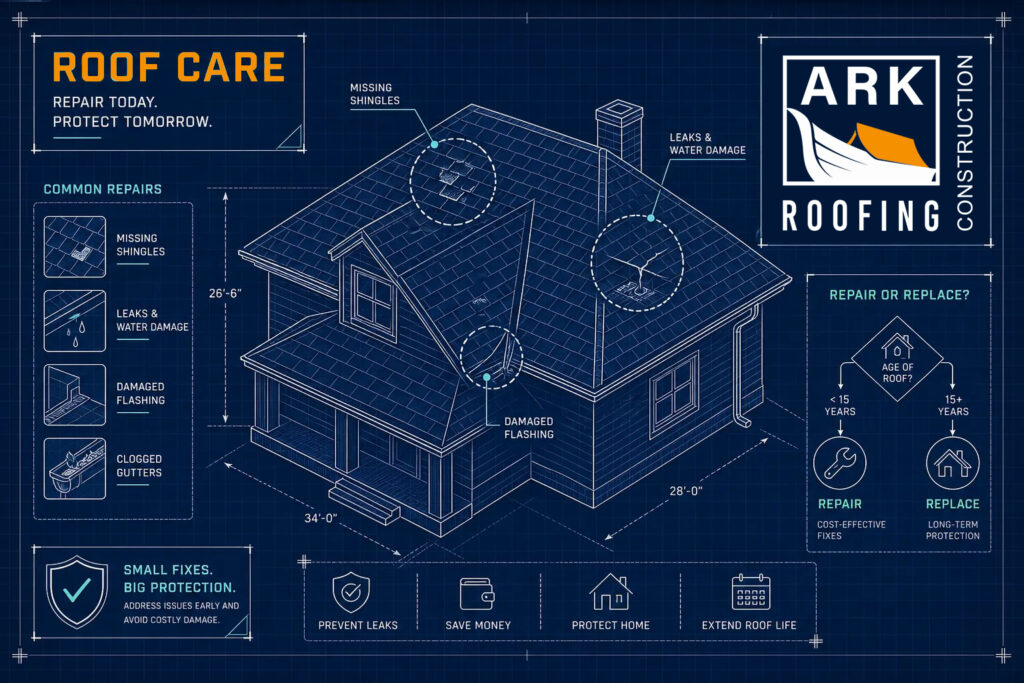
Year round roof repair in California can prevent major damage and potentially save homeowners thousands of dollars. If your ceiling starts dripping during a storm, keep people away from the affected area and call a roofing contractor. If you’re planning ahead, check the roof from the ground in spring and fall and after severe weather. Look for displaced roofing, debris in drainage paths, and new stains indoors. An isolated leak can often be repaired when the surrounding roof is sound. Repeated leaks or widespread deterioration call for a closer look at replacement.

What to Do When Your Roof Leaks
Move belongings away from the leak if you can do so safely. Keep clear of a bulging ceiling, suspected structural damage, or water near electrical fixtures. Stay off the roof and leave temporary tarping to a professional. Photograph visible damage from a safe location and note when it appeared. If you suspect storm damage, contact your insurer promptly, save receipts for temporary protection, and ask what documentation and inspection it needs before permanent repairs. Coverage depends on your policy, the cause of the damage, and your deductible. [1]
How to Spot Roof Damage From the Ground
Use binoculars to look for missing shingles, cracked or displaced tiles, loose metal trim, lifted flashing, and debris in valleys. After rain, note gutter overflow or water spilling down siding. Dark streaks alone do not establish a leak or granule loss. If you see a sagging roofline or a large fallen limb, keep clear of the area and arrange a prompt professional assessment.
Indoors, check for new ceiling stains, peeling paint, or damp insulation visible from a safe attic access point. A stain can appear some distance from the opening because water travels along framing or the underside of the roof deck. Note whether it shows up during wind-driven rain, after prolonged rain, or in dry weather. Those details help a roofer distinguish a roof leak from other possible sources such as condensation or plumbing.
Ask your roofer to trace the water entry and inspect the surrounding assembly. Flashing at walls, skylights, chimneys, vents, and solar mounts should work with the surrounding roofing and water-control layers. A visible bead of cracked sealant may be one clue, especially when water can enter behind the flashing. [2]
A Seasonal Roof Maintenance Plan for California
California’s climates vary widely. Use spring and fall as reminders, then adjust your schedule for trees, wind exposure, roof design, and recent weather. Clear gutters and roof drains as often as debris accumulates. Arrange professional service wherever clearing them requires climbing or roof access.
Spring
After the wet season, check for new stains, gutter overflow, displaced roofing, and debris around drains. If you had a winter leak, arrange an inspection before the next wet season.
Summer
Use dry weather to schedule planned work on flashing, damaged roof coverings, or low-slope drainage. In wildfire-prone areas, have debris cleared from the roof, gutters, and around roof attachments. CAL FIRE also recommends noncombustible gutter covers to reduce debris buildup. [3]
Fall
Before sustained rain, have valleys, gutters, downspouts, and low-slope drains cleared. Check for loose roof-edge components after strong winds, and recheck drainage if nearby trees drop leaves later in the season.
Winter
Monitor the ceiling and walls after heavy rain or wind. Note where gutters overflow or water remains on a low-slope roof after the storm. Arrange an assessment if the problem repeats or you see an active leak. In California’s higher elevations, ask a local professional about snow and ice concerns specific to your home.

Roof Repair Priorities Near Ark’s Four California Locations
Valley Village and the San Fernando Valley
Check shingles, roof edges, vent boots, and exposed flashing after hot summers or strong winds. If your home has a low-slope addition or ADU, include its drains and the transition to the main roof in the inspection. Ark’s Valley Village office serves communities including Studio City, North Hollywood, Sherman Oaks, and Burbank.
Pasadena and the San Gabriel Valley
Check valleys and gutters where trees drop debris, and look for shifted tiles after strong winds. For foothill properties, include ember-resistant roof and gutter details in the conversation. The Pasadena office serves nearby communities including Altadena, South Pasadena, San Marino, and Alhambra.
Emeryville and the East Bay
Before the wet season, pay attention to roof-to-wall flashing, parapets, and drainage on low-slope roofs. During windy rain, note whether moisture appears near a skylight or an exterior wall. The Emeryville office serves Oakland, Berkeley, Albany, and other East Bay communities.
Sacramento and surrounding communities
Use dry weather to address worn vent boots, cracked shingles, or aging roof details before winter rain. Check for clogged downspouts and repeat gutter overflow after storms. The Sacramento office serves areas including Natomas, Arden-Arcade, Carmichael, and Rancho Cordova. [4]
What a Repair Involves by Roof Type
Asphalt shingles
For isolated damage, a roofer can check for a compatible replacement shingle and inspect the underlayment and decking where accessible. Fastener type, placement, and quantity depend on the product instructions and applicable code.
Clay or concrete tile
A broken tile may be replaceable on its own. If there’s a leak, ask the roofer to assess the underlayment, flashing, and valley beneath the tiles. A visible tile break may be only part of the problem.
Metal roofing
Standing-seam and exposed-fastener systems use different details. The roofer should identify the system before specifying a compatible repair to a panel, flashing, seam, or fastener.
Low-slope roofing
With systems such as TPO or modified bitumen, the roofer checks membrane seams, penetrations, perimeter details, and drains. Ask how the patch will bond to the existing membrane and how the scope will address recurring ponding if it contributes to the problem.
When to Repair and When to Consider Replacement
Repair is worth considering when the source is identifiable, the damage is localized, and the surrounding materials can support a durable repair. A failed vent boot on an otherwise sound shingle roof is a different scope from multiple leaks through deteriorated underlayment on a tile roof.
Ask for a replacement option when leaks keep returning, several roof areas are deteriorating, or the contractor finds extensive moisture damage beneath the surface. A sagging roofline calls for prompt assessment of the structure. The decision depends on the extent of damage, remaining service life, and what the roofer finds once materials are lifted.
What Affects California Roof Repair Costs in 2026
The price depends on the roof material, pitch and access, the work needed to trace the leak, and the amount of roofing that must come off to reach it. A localized flashing repair may require less labor than opening a large tile section, replacing deteriorated decking, or coordinating access around solar equipment.
Compare written estimates for the same scope. Ask each contractor to identify the likely leak source, the materials and areas included, what happens if concealed damage is uncovered, who handles permits, and what workmanship warranty applies. If replacement is an option, ask for a separate estimate. Check the contractor’s license with the California Contractors State License Board. [5]
Confirm permit requirements with your local building department before work starts. For a reroof, ask whether the California Energy Code or a local ordinance requires a cool-roof product for your property. The 2025 California Energy Code took effect January 1, 2026. Requirements vary with the project and location. [6]
Roof Repair Questions California Homeowners Ask
Can a roof be repaired during the rainy season?
A contractor can assess an active leak and arrange temporary protection when conditions permit. Permanent work may need a dry window, depending on the roof system, product requirements, and site conditions.
Does a ceiling stain mean the roof needs replacing?
A stain is a reason to investigate. A single leak at a vent or skylight may be repairable. The roofer should identify the source and check the surrounding materials before recommending the scope.
How often should I schedule an inspection?
Use spring and fall for ground-level checks, and check again after severe weather. Arrange a professional inspection if you find damage, have an active or recurring leak, or are unsure about the condition of an older roof. Keep dated photos, estimates, and repair records so you can track changes.
Can I get a small repair on a tile or flat roof?
Often, if the damage is localized and the existing roof can accept a compatible repair. On tile, the contractor may need to lift tiles to inspect the underlayment. On a low-slope roof, the inspection should include membrane seams and drainage.
Request a Roof Assessment From Ark Roofing
Tell us your ZIP code, roof type if known, where you see the leak or damage, and when it first appeared. Contact the nearest Ark Roofing & Construction office to confirm service availability for your address and project.
Valley Village (818) 233-0002 • Pasadena (626) 657-3036
Emeryville (510) 250-5156 • Sacramento (916) 236-4551
References
[1] California Department of Insurance residential property claims guide
[2] Building America Solution Center guidance on roof flashing
[3] CAL FIRE home hardening guidance for roofs and gutters
[4] Ark Roofing & Construction service areas and office details
[5] California Contractors State License Board license lookup
[6] California Energy Commission 2025 Building Energy Efficiency Standards
Leave a Reply