
Roof Repairs In California: Costs, Warning Signs, Repair Vs. Replacement & Expert Advice
Understand common roof problems, practical repair costs, emergency steps, contractor selection and the repair-versus-replacement decision for properties in Sacramento, Emeryville, Pasadena, Valley Village and nearby communities.

Certified, Trusted, Licensed, And Insured
Roofing work affects the structure, weather protection and long-term value of your property. Ark Roofing combines verified credentials with clear communication and regional service.
GAF Master Elite® credentials support access to qualifying manufacturer-backed roofing systems and enhanced warranty options.
Documented recommendations, written scopes and straightforward explanations help property owners make informed decisions.
Ark Roofing & Construction operates as a California roofing contractor. CA Contractors License #1138070.
Professional insurance protections and jobsite practices help safeguard customers, workers and properties during roofing work.
How Much Does Roof Repair Cost In California?
Many common residential roof repairs fall between approximately $400 and $2,500. Localized shingle work may fall toward the lower end, while complex flashing, difficult access, several leak sources or damaged decking can increase cost. A written inspection provides the best property-specific estimate.
Planning figures are educational, not a quote. Material, labor, pitch, access, permits, region and concealed conditions affect final pricing.
What This Guide Answers
What Is Damaged?
Understand shingles, tile, flashing, valleys, vents, gutters, decking, and membranes.
What May It Cost?
Review practical planning ranges and variables that move estimates.
Repair Or Replace?
Use age, damage extent, leak history, and structural condition.
Who Should Do It?
Verify licensing, insurance, scope, warranties, permits, and references.
How A Roofing System Protects Your Property
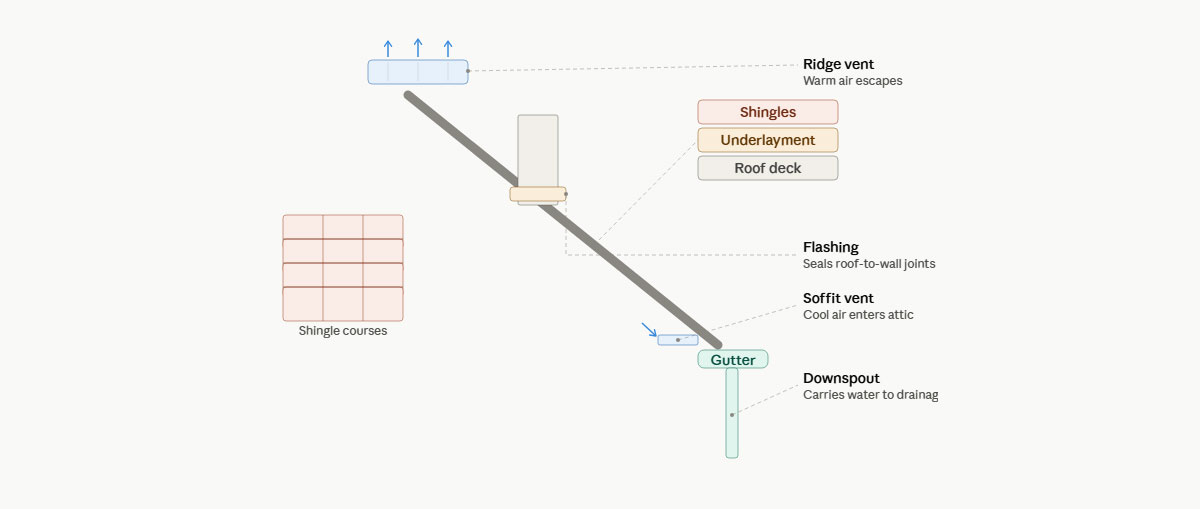
A roof is a layered water-management system, not just the visible shingle, tile, metal panel, or membrane. Durable repairs identify which layer failed and restore the path that moves water safely off the building.
Roof Covering
The exposed material sheds rain and resists wind, ultraviolet light, impact, and temperature changes. Common California systems include asphalt shingles, clay and concrete tile, metal, TPO, PVC, and modified bitumen.
Underlayment And Deck
Underlayment provides secondary moisture protection. The deck supports the roof assembly. Prolonged leaks can soften wood decking and increase repair costs.
Flashing And Drainage
Flashing protects penetrations and transitions. Valleys, gutters, drains, and downspouts carry concentrated water away. Many leaks begin where these components meet.
Why Roof Leaks Are Difficult To Trace
The ceiling stain is often not directly below the exterior defect. Water can enter at a vent, chimney, valley, wall intersection, lifted shingle, or membrane seam, then follow sheathing or framing before appearing indoors. A lasting repair identifies the entry point rather than treating only the visible symptom.
Roof Damage Warning Signs
Interior Signs
- Ceiling stains or active dripping
- Peeling paint or bubbling drywall
- Damp attic insulation
- Musty odors after rain
- Daylight through the roof assembly
Exterior Signs
- Missing or lifted shingles
- Broken or displaced tiles
- Open flashing or cracked pipe boots
- Debris in valleys
- Sagging gutters or fascia
System-Wide Signs
- Widespread granule loss
- Curling across several slopes
- Recurring leaks
- Visible sagging
- Soft or deteriorated decking
Ask A Roofer: Does One Missing Shingle Matter?
It can. Risk depends on location, underlayment condition, fastener exposure, and wind-driven rain. Prompt replacement is usually less expensive than waiting for deck or interior damage.
Common Roof Repairs
Damaged Or Missing Asphalt Shingles
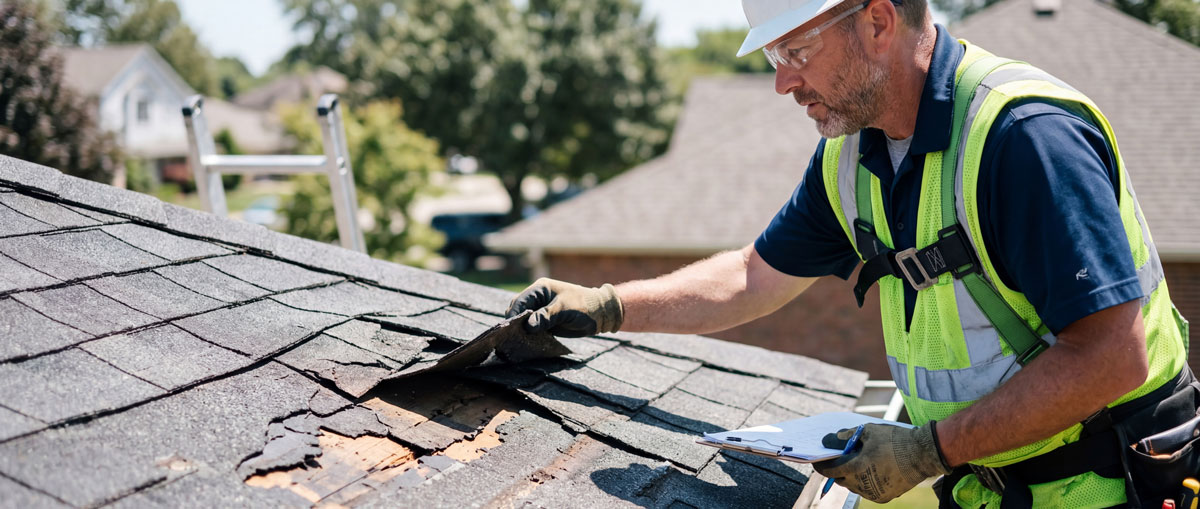
Wind, branches, age, ultraviolet exposure, installation defects, and foot traffic can crack, lift, tear, or remove shingles. Limited damage on a relatively young roof often supports localized repair. Similar deterioration across several slopes suggests broader aging.
Flashing, Pipe Boot, And Penetration Repairs
Flashing protects chimneys, plumbing vents, skylights, valleys, dormers, and roof-to-wall intersections. Corrosion, movement, loose fasteners, failed sealants, or poor overlap can create direct water paths.
Valley And Drainage Repairs
Valleys carry concentrated runoff. Debris, damaged metal, worn shingles, or failed underlayment can allow water beneath the covering. Clogged or detached gutters can keep water at the roof edge and damage fascia, soffits, and decking.
Tile Repairs
Clay and concrete tiles can crack from impact, movement, age, or improper foot traffic. The underlayment, battens, flashing, and surrounding tiles should also be evaluated.
Flat-Roof Membrane Repairs
TPO, PVC, and modified bitumen systems may develop open seams, punctures, failed penetrations, flashing defects, or ponding. The repair must be compatible with the existing membrane and address drainage or trapped moisture where present.
California Roof Repair Costs
These planning ranges are not fixed prices. A site-specific written estimate is required.
| Repair | Planning range | Cost factors |
|---|---|---|
| Localized shingle repair | $400-$1,500 | Quantity, match, pitch, access, underlayment |
| Flashing repair | $500-$2,500 | Location, removal, corrosion, deck condition |
| Roof leak repair | $500-$2,000 | Source complexity, layers affected, hidden damage |
| Gutter repair | $150-$600 | Length, height, fascia, material, access |
| Emergency tarping | $300-$1,000 | After-hours response, size, pitch, wind, access |
Schedule A Written Roof Inspection
Get straightforward guidance about the source of the problem, the recommended repair scope, and whether replacement should be considered.
Repair Or Replace? Use This Three-Factor Test
Repair Often Makes Sense When
- One leak source is identified
- Damage is localized
- The roof is young or mid-life
- Decking and surrounding materials are sound
- There is no recurring failure pattern
Replacement May Make More Sense When
- Leaks occur in several areas
- Deterioration is widespread
- Decking is extensively damaged
- The roof is near its service life
- Several costly repairs are needed together
What To Do During An Active Roof Leak
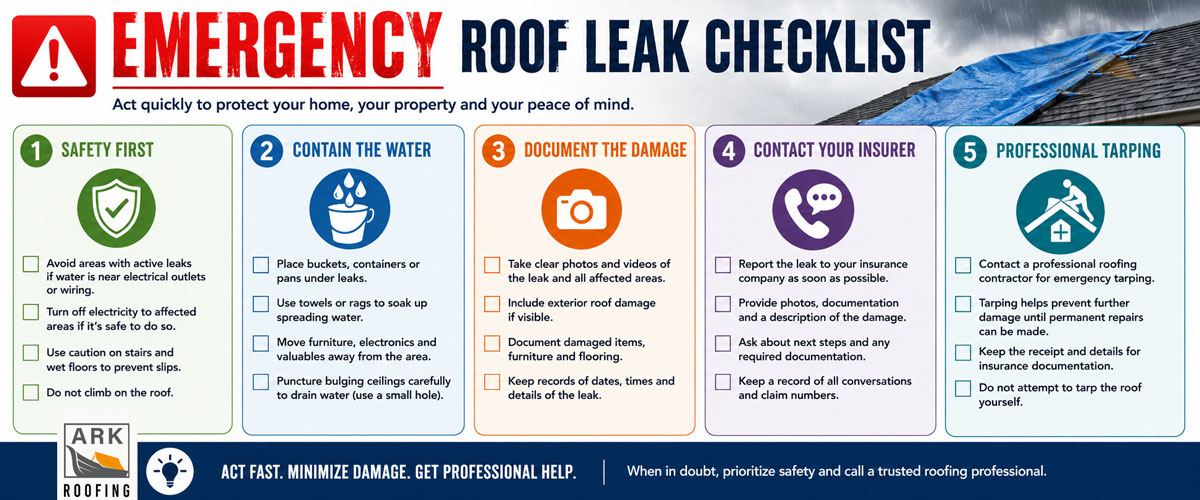
- Keep people away from electrical hazards.
- Move furniture, documents, electronics, and valuables.
- Contain water with buckets where safe.
- Photograph interior and safely visible exterior damage.
- Contact the insurer and ask about claim requirements.
- Arrange professional temporary protection when conditions permit.
Insurance Documentation And Written Inspections
Coverage depends on the policy, exclusions, deductible, cause of loss, maintenance history, and roof condition. A contractor cannot determine coverage for the insurer, but a clear inspection report can document visible conditions.
- Photograph interior and exterior conditions safely
- Record the date and weather event
- Keep temporary repair and drying receipts
- Retain inspection reports and written estimates
- Do not authorize permanent work until claim procedures are understood
What A Thorough Inspection Should Cover
A useful report may document roof coverings, penetrations, flashing, valleys, drainage, gutters, attic ventilation, visible deck conditions, and evidence of interior moisture. Written findings help homeowners compare contractors on the same scope.
How To Vet A California Roofing Contractor
Request Before Signing
- California contractor license number
- Current liability and workers' compensation documentation
- Detailed written scope
- Permit responsibility
- Workmanship and material warranty terms
- Recent local references
Red Flags
- Pressure to sign immediately
- Demand for full payment upfront
- No written scope
- Unverifiable licensing or insurance
- Vague allowances
- No process for hidden damage or change orders
California Roof Maintenance Calendar
| Season | Recommended actions |
|---|---|
| Spring | Inspect winter storm damage, clear gutters, review flashing, check attic moisture. |
| Summer | Look for UV aging, cracked sealants, ventilation concerns, and loose ridge materials. |
| Fall | Remove debris, trim overhanging branches, clean drainage, prepare for rain. |
| Winter | Monitor storms, inspect after high winds, document leaks, and arrange prompt repairs. |
Schedule A Written Roof Inspection
Get straightforward guidance about the source of the problem, the recommended repair scope, and whether replacement should be considered.
Local Roof Repair Guidance For Ark Roofing'S Four Locations
Sacramento Roof Repair
Heat, ultraviolet exposure, winter rain, wind, tree debris, and clogged drainage can affect Sacramento-area roofs. Service may include Sacramento, Elk Grove, Roseville, Citrus Heights, Rancho Cordova, Carmichael, Fair Oaks, Davis, West Sacramento, and Folsom.
Emeryville And East Bay Roof Repair
Marine moisture, wind-driven rain, older building stock, flat-roof drainage, and biological growth can influence East Bay repair needs. Nearby communities include Berkeley, Oakland, Alameda, Albany, Piedmont, Richmond, and El Cerrito.
Pasadena Roof Repair
Pasadena properties commonly include clay tile, concrete tile, architectural shingles, and historic roof details. Service areas may include Altadena, Arcadia, Sierra Madre, South Pasadena, San Marino, and Glendale.
Valley Village Roof Repair
Extreme heat, ultraviolet exposure, Santa Ana winds, and seasonal rain can affect San Fernando Valley roofs. Nearby communities include Studio City, Sherman Oaks, Toluca Lake, North Hollywood, Burbank, Van Nuys, and Encino.
Commercial And Flat-Roof Repairs
Commercial roof repairs may involve membrane seams, punctures, drains, expansion joints, HVAC penetrations, flashing, and ponding water. TPO, PVC, and modified bitumen systems require compatible materials and methods. A maintenance plan can document conditions and address minor defects before they disrupt operations.
Roof Repair Decision Assistant
Schedule A Written Roof Inspection
Get straightforward guidance about the source of the problem, the recommended repair scope, and whether replacement should be considered.
Roof Repair Frequently Asked Questions
Many common residential repairs fall between about $400 and $2,500. Material, access, pitch, labor, permits, region, and hidden deck damage affect the final price.
Localized shingle damage and flashing failures are among the most common repairs. Flashing protects chimneys, vents, skylights, walls, and valleys.
Yes. A missing shingle can expose vulnerable layers to wind-driven rain. Prompt replacement is usually less expensive than repairing water-damaged decking later.
Consider roof age, whether damage is isolated or widespread, recurring leak history, and deck condition. A young roof with localized damage often favors repair.
Many localized repairs can be completed in one day. Complex access, special materials, several leak sources, or deck replacement may require more time.
Interior work may temporarily control dripping, but most leaks require an exterior repair at the actual entry point. Water can travel far from the visible stain.
Avoid electrical hazards, move valuables, contain water, photograph damage, contact the insurer, and arrange professional temporary protection when conditions are safe.
It is a temporary waterproof covering secured over a damaged area to reduce additional water intrusion until permanent repairs can be completed.
Coverage depends on the policy and cause of loss. Sudden covered damage may be treated differently from age, wear, maintenance issues, or neglect.
For active damage, contact both promptly. The insurer explains claim requirements, while a roofer can document conditions and perform authorized temporary protection.
An annual inspection and another after major wind, rain, or falling debris can identify problems early. Older roofs may benefit from more frequent review.
It may cover roofing materials, flashing, valleys, penetrations, drainage, gutters, ventilation, visible deck conditions, and interior evidence of moisture.
Request the license number and verify it through the California Contractors State License Board. Also request insurance, written scope, warranty terms, and local references.
Pressure to sign immediately, full payment demands, no written scope, vague allowances, and reluctance to provide licensing or insurance information are warning signs.
It should identify the repair area, materials, removal, flashing or underlayment work, deck allowances, cleanup, schedule, payment terms, permits, and warranties.
Yes. Water can back up at the roof edge and wet fascia, soffits, and decking. Leaves, windblown debris, and wildfire ash can contribute to blockage.
Water can enter at one point and travel along sheathing or framing before dripping indoors. A lasting repair identifies the exterior entry point.
Corrosion, movement, loose fasteners, lifted edges, failed sealant, improper overlap, and poor installation can all create water paths.
Often yes, when the underlayment and surrounding roof remain sound. Matching tile and avoiding damage to adjacent pieces require appropriate experience.
Some shedding is normal. Heavy, widespread granule loss on an older roof can indicate surface wear and reduced ultraviolet protection.
Requirements depend on local jurisdiction and project scope. The contractor should identify permit responsibilities in the written agreement.
Some contractors offer financing, subject to approval. Compare total cost, interest, fees, promotional deadlines, and contract terms.
Active leaks, sagging, visible openings, punctures, displaced flashing, large branches, and water near electrical systems require prompt attention.
Use the ground, windows, attic, or binoculars. Walking on wet, steep, tile, or storm-damaged roofs creates fall and material-damage risks.
Replacement may be more practical when several areas need work, leaks recur, the roof is near its service life, or repair cost is a large share of replacement.
Sagging may indicate deteriorated decking, framing concerns, excess loading, or prolonged moisture. It warrants prompt professional evaluation.
Ash can clog gutters and drains, retain moisture, and contribute to corrosion or drainage problems. Cleaning should protect roofing materials.
Strong winds can lift shingles, loosen ridge materials, displace flashing, and expose weak installation points, sometimes without obvious ground-level damage.
Open seams, punctures, failed flashing, blocked drains, deteriorated penetrations, and ponding water are common low-slope roof issues.
Many localized TPO defects can be repaired using compatible materials and heat-welded techniques. Age, contamination, and damage extent affect repairability.
Fasteners, seams, sealants, penetrations, corrosion, flashing, and damaged panels are common repair areas.
Not always. Age, frame condition, seal failure, and flashing compatibility determine whether repair or replacement is more practical.
They can crack, split, pull away, or deteriorate from heat and ultraviolet exposure, allowing water around plumbing vents.
Persistent moisture can support microbial growth. Correcting the source and drying affected materials promptly helps limit damage.
Usually yes for localized exterior work. Discuss noise, vibration, pets, children, driveway access, and interior protection before work begins.
Clear access, secure pets, move fragile items, identify attic access, and share leak history, prior repairs, and insurance information when relevant.
The contract should explain debris removal, nail collection, landscaping protection, disposal, and final cleanup.
They help confirm communication, workmanship, cleanup, scheduling, and familiarity with local materials, climate, and permitting.
Not necessarily. Confirm whether it is no-obligation, what documentation is provided, and whether specialty testing carries fees.
It records what was observed, where it was found, and how severe it appears, making contractor estimates easier to compare.
Call Ark Roofing & Construction
Select a location to call the appropriate regional office.